How to Choose the Right Driveway Gate and Motor (Australia Guide)
Choosing the right driveway gate and motor isn’t just about appearance—it directly impacts your property’s security, convenience, safety, and long-term reliability. Whether you’re installing a gate for a suburban home, commercial site, or rural property, selecting the wrong system can lead to poor performance, frequent breakdowns, and expensive upgrades.
In Australia, driveway conditions vary widely—from tight suburban blocks to long rural driveways—so there’s no one-size-fits-all solution. The ideal setup depends on factors like space, slope, wind exposure, gate weight, and power availability.
This guide walks you through everything you need to consider when choosing a driveway gate and motor, helping you make a confident, informed decision.
Sliding vs Swing Gates – Which Is Better?
One of the first decisions you’ll need to make is whether a sliding gate or swing gate is more suitable for your property. Each has distinct advantages depending on your space and conditions.
Sliding Gates (Best for Space, Strength & Wind Resistance)
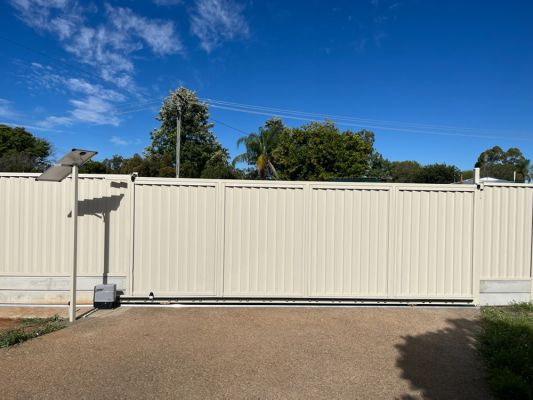
Sliding gates move horizontally along a track and are typically the preferred option for automation.
They are ideal when:
Your driveway is wide (generally 4 metres or more)
You want a solid or fully enclosed gate for privacy
Your property is exposed to strong winds
You need a durable, long-term solution
Because sliding gates don’t swing outward, they are less affected by wind pressure and are more stable over time. This makes them particularly popular in coastal and rural areas across Australia.
However, they do require:
Sufficient side room for the gate to slide open
A concrete track or plinth
Proper drainage and ground preparation
Swing Gates (Best for Simplicity & Cost)
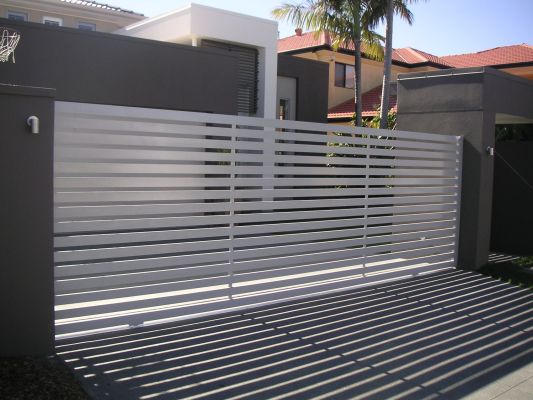
Swing gates operate like a traditional door, opening inward or outward on hinges.
They are better suited when:
You have limited side space
Your driveway is relatively flat and clear
You want a simpler, lower-cost installation
Aesthetic appeal is a priority (common in residential homes)
That said, swing gates can present challenges:
They are more affected by wind (especially solid designs)
They require more clearance space to open
Motors can be placed under greater strain on longer or heavier gates
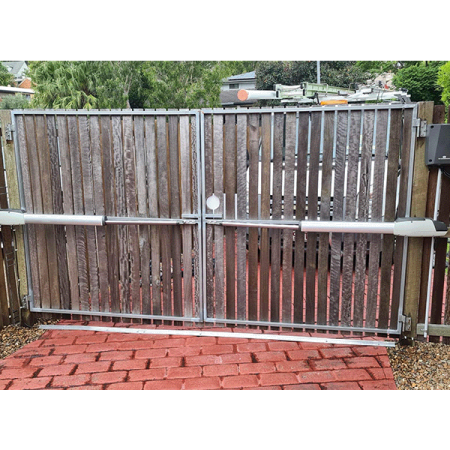
For smaller properties or decorative entrances, swing gates can be a practical and attractive option—but they need to be carefully matched with the right motor.
Driveway Size and Layout (A Critical Factor)
Your driveway’s size and layout will often determine which gate type is even possible.
Key considerations include:
Width: Sliding gates need space equal to the gate width to open fully
Slope: Swing gates can struggle on sloped driveways without specialised setups
Turning space: Vehicles must be able to safely approach and pass through
For example, a steeply sloped driveway may rule out standard swing gates altogether, while a narrow entry may limit sliding options.
Carefully assessing your site before choosing a gate system will prevent costly mistakes later.
Gate Size, Weight and Design
The size and design of your gate play a major role in determining what motor you need.
Why Gate Weight Matters
Heavier gates require more powerful motors. Underestimating weight is one of the most common causes of motor failure.
Factors that increase weight include:
Steel construction
Long gate spans
Decorative or reinforced designs
Wind Resistance (Often Overlooked)
Solid or fully enclosed gates act like a “sail” in windy conditions. This dramatically increases the load on your motor—even if the gate itself isn’t particularly heavy.
In high-wind areas, it’s often better to:
Choose a sliding gate
Use slatted or open designs
Select a motor with higher capacity than required
Ignoring wind resistance can lead to premature wear and costly repairs.
Choosing the Right Gate Motor (Most Important Decision)
Your gate motor is the heart of your system. Choosing the wrong one can result in slow operation, breakdowns, or complete failure.
Matching Motor Capacity to Gate Weight
Every gate motor is rated for:
Maximum gate weight
Maximum gate length
Duty cycle (how often it can operate)
Don't pick a motor that is “just enough.” Instead, allow a buffer for:
Wind load
Wear over time
Future upgrades
A good rule is to choose a motor rated at least 30–50% above your gate’s actual weight.
The Impact of Driveway Slope
Slope is one of the most underestimated factors in gate automation.
Even a slight incline can dramatically increase the load on your motor. For example:
A 200kg gate on a flat surface behaves as expected
The same gate on a slope can perform like a much heavier gate
This added resistance forces the motor to work harder, reducing lifespan and increasing the risk of failure.
If your driveway is sloped:
Consider a higher-capacity motor
Ensure correct installation and alignment
Seek professional advice before installation
In Depth Technical Info
Sliding Gates
When it comes to selecting your automation for a sliding there are few factors to take into consideration:
Length of gate - gate openers have a max run time, therefore if your gate is too long for the motor selected then you will end up with issues of your gate not fully opening.
Gate weight - all slide gate motors will specify a gate weight. This is important to note, but more importantly is the running force and pull force of the motor. You will see in the explanations and examples below how these figures can drastically change.
Gradient or fall over driveway - this is a big factor, especially if you have a heavy gate on a large fall. As you can see from the examples below, even a light weight gate can double its actual weight depending on its fall.
Speed - If you require your gate to open fast (you may be coming off a main road) or you have a long gate and don’t want to wait the 30 seconds that some motors take, then you would be better off looking at your sliding gate motors.
Checking Pull Force & Running Force
The driveway gate pull and running forces should be measured before purchasing or installing any gate opener. Should the measured forces exceed those in the table above for the Ultima units, then the motor must not be installed. It may be possible to reduce these forces by carrying out maintenance on the gate rail but if not, then the motor must not be installed.
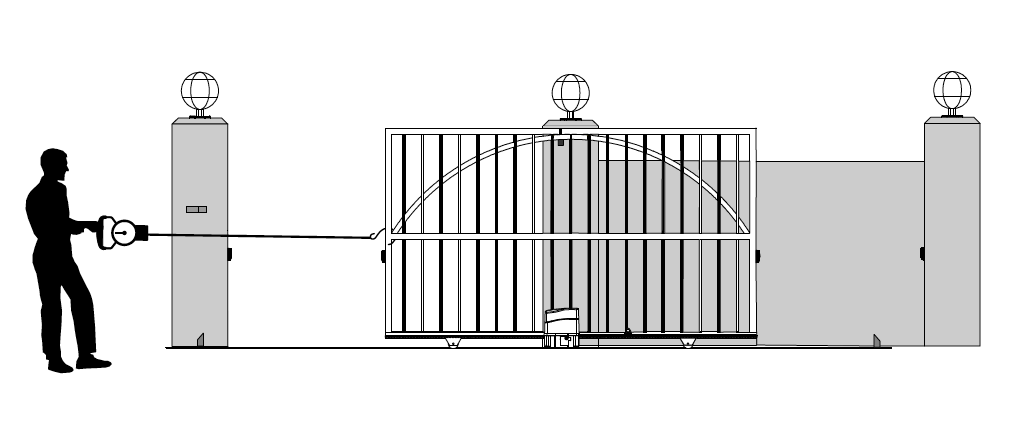
These forces can be measured using a fishing or luggage scale (see figure above).
Pull Force: place the gate in the fully open/closed position and pull on the scale until the gate starts moving. The value showing on the scale at the point that the gate starts moving is the Pull Force kgf. This should be checked in both directions.
Running Force: this is the maximum value read while the gate is moving before coming to the fully open position.
Checking the Effective Gate weight if on a Gradient
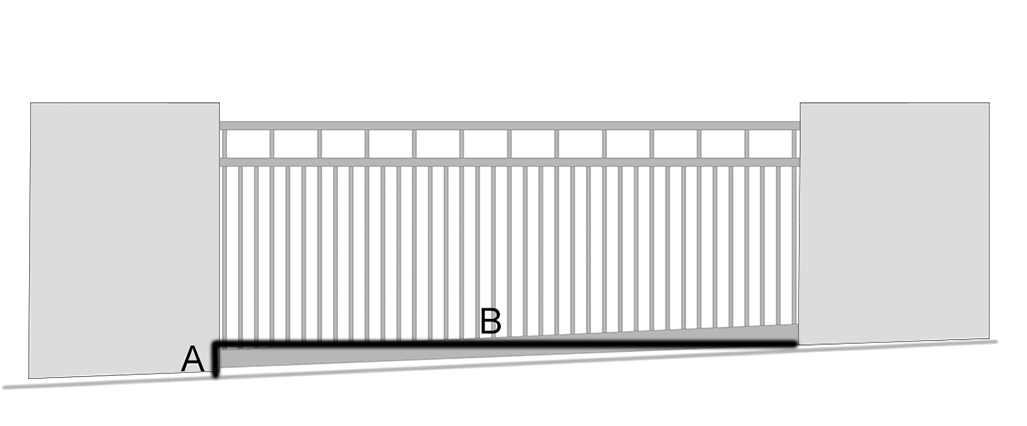
Gradient = A (0.3m) / B (4m)
Effective Gate Weight When is a 200kg gate really 800kgs - Working out the effective gate weight
Effective Gate Weight = 40 x gradient + 1 x actual gate weight Eg. A driveway, that falls 300mm over 4m has an effective weight of 800kgs Effective Gate Weight = 40 x .075 + 1 x 200 Therefore, the example above wouldn't suit either of these motors
Other Examples:
80kg actual gate weight - Fall 100mm over 4m = 160kg effective gate weight
80kg actual gate weight - Fall 200mm over 5m = 208kg effective gate weight
150kg actual gate weight - Fall 350mm over 6m = 266kg effective gate weight
Swinging Gates
Swing gate automation also comes with its factors and gate requirements:
Length of gate - all swing motors will have a maximum gate length requirement. This is due to the leverage required of the actuator arm trying to pull your gate length open. The longer the gate, the more strain placed on the actuator arm to pull and push the gate open and closed.
Gate weight - swing motors will also have a maximum gate weight they will work off also using the same explanation as the above gate length. You may find that the longer the gate becomes, the maximum gate weight allowed will drop.
Gate design - this is very important for the functioning of the actual motors. Having a gate design that is wind friendly will prevent your gate from acting like a big wind sail, which in turn places extra pressure not only on the swing motor but also on all working parts of the gate.
Speed and Safety Considerations
Gate speed is more important than many people realise.
Busy roads: Faster opening reduces the risk of accidents
Rural properties: Slower operation is usually acceptable
Modern motors often include soft start/stop features, improving safety while reducing wear on components.
Ground Preparation and Installation
Even the best gate and motor will fail if the installation is poor.
Sliding Gate Requirements
Sliding gates require:
A level concrete plinth
A properly installed track
Adequate drainage to prevent water damage
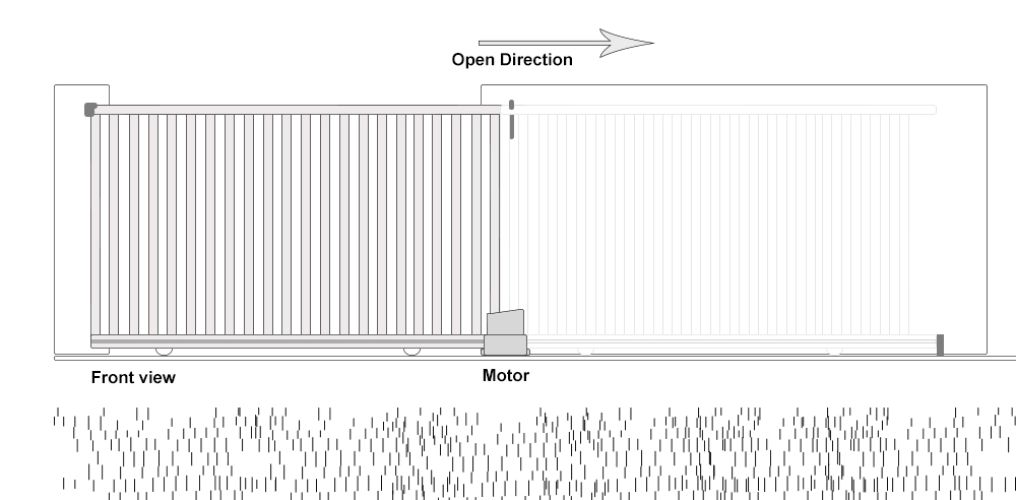
Any unevenness can cause the gate to bind or derail over time.
Swing Gate Requirements
Swing gates need:
Strong support posts set in deep concrete (typically 600mm or more)
Correct hinge alignment
Clearance from the ground to avoid scraping
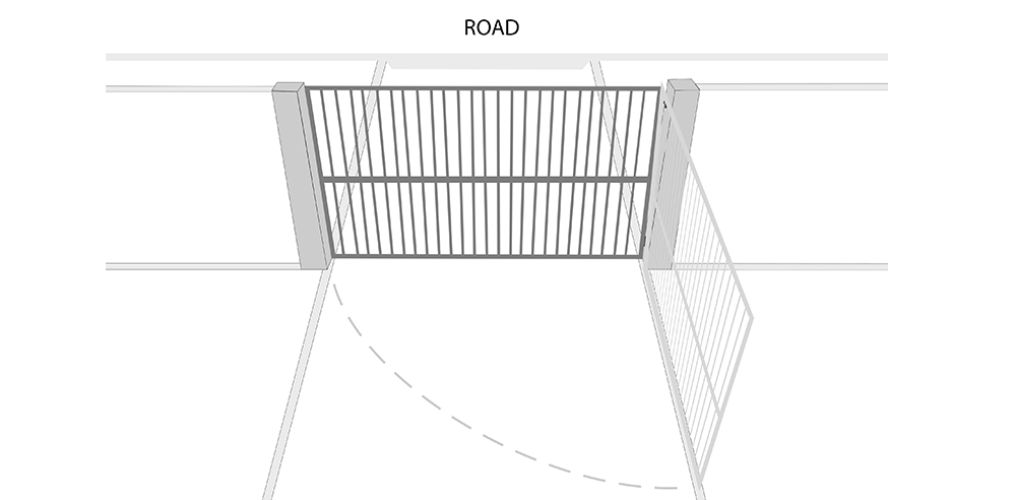
Weak posts or poor alignment can lead to sagging gates and motor strain.
Power Options – Electric vs Solar Gate Systems
Choosing the right power source is another key decision.
Electric Gate Motors (Mains Powered)
Electric systems are the most common option.
Benefits include:
Consistent power supply
Lower upfront cost
Reliable operation
They are ideal for suburban homes or properties with easy access to mains power.
Solar Gate Motors (Off-Grid Solution)
Solar-powered systems are increasingly popular in Australia, especially for rural and remote properties.
They are best suited for:
Long driveways without power access
Acreage and farms
Eco-conscious homeowners
Benefits include:
No electricity bills
Operation during power outages
Environmentally friendly
However, they do require:
Proper battery sizing
Adequate sunlight exposure
Occasional maintenance
When designed correctly, solar gate systems can be just as reliable as mains-powered options.
Common Mistakes to Avoid
Avoiding these common errors can save you significant time and money:
Choosing a motor based on price instead of capacity
Ignoring slope and wind resistance
Installing swing gates in high-wind areas
Underestimating gate weight
Poor ground preparation
Not planning for future usage
Many gate failures come down to poor planning rather than faulty equipment.
What’s the Best Driveway Gate for Your Property?
While every property is different, here are some general guidelines:
Wide, windy or exposed areas: Sliding gate
Flat, residential driveways: Swing gate
No access to power: Solar gate system
Heavy or large gates: High-capacity motor
If you’re unsure, it’s always worth consulting a professional to ensure your system is correctly specified.
FAQs About Driveway Gates and Motors
What is better: sliding or swing gate?
Sliding gates are generally better for wide driveways and windy areas, while swing gates are more suitable for smaller, flat spaces with limited side room.
How do I choose the right gate motor?
Choose a motor based on your gate’s weight, length, and environmental conditions. Always allow extra capacity for slope and wind resistance.
Can a driveway gate be installed on a slope?
Yes, but it requires careful planning. Sliding gates or specialised swing setups are often recommended for sloped driveways.
Are solar gate motors reliable in Australia?
Yes, when properly installed with the correct battery capacity and solar positioning, they can be highly reliable—even in remote areas.
How much does an automatic driveway gate cost?
Costs vary depending on gate type, size, and motor selection, but investing in the right system upfront can save money on repairs and upgrades later.
Choosing the right driveway gate and motor isn’t just about functionality—it’s about creating a system that will perform reliably for years to come.
By carefully considering:
Gate type (sliding vs swing)
Size and weight
Slope and environmental conditions
Motor capacity
Power source
You can ensure your investment delivers security, convenience, and long-term value.
If you’re planning a new installation or upgrading an existing system, taking the time to get these factors right will make all the difference.
Want Help Choosing the Right System?
If you’re unsure which gate or motor is best for your property, getting expert advice can save you from costly mistakes.