Types of Gate Automation (Complete Guide for Australian Properties)
Choosing the right type of gate automation is one of the most important decisions when installing an automatic gate. Whether you’re securing a residential driveway, rural property, or commercial site, the type of gate motor you choose will directly impact performance, reliability, cost, and long-term maintenance.
In Australia, conditions like heat, dust, rain, and uneven terrain mean that not all gate automation systems perform equally. Selecting the right setup from the start can save you thousands in repairs and upgrades.
In this guide, we break down the different types of gate automation systems—including swing gate motors, sliding gate automation, and underground operators—so you can confidently choose the best solution for your property.
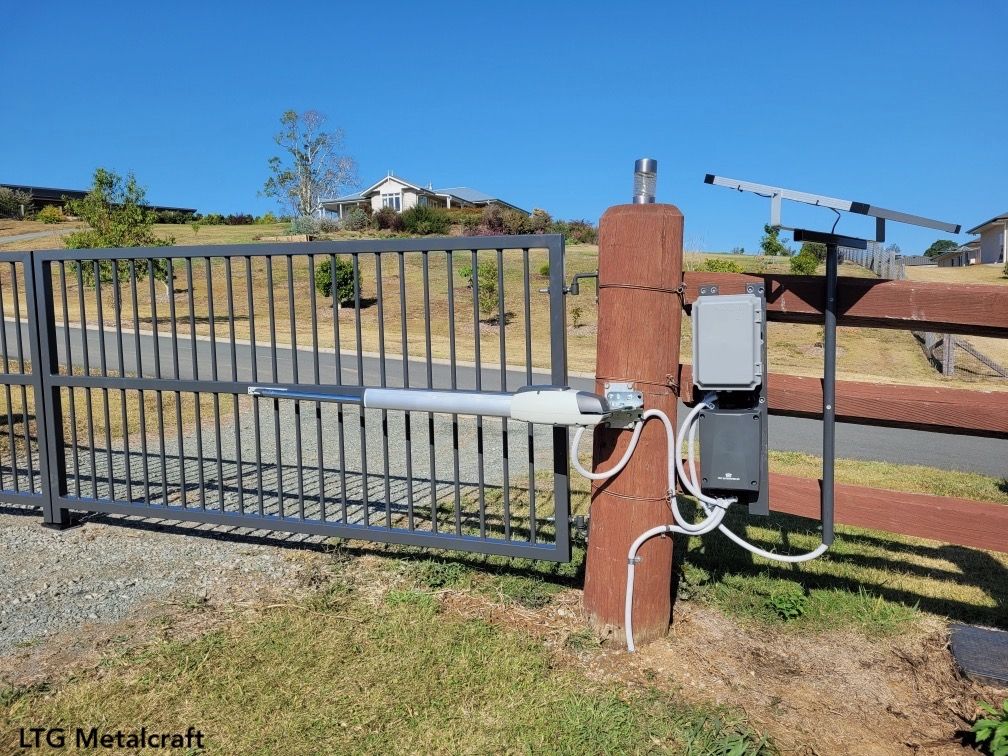
Articulated Arm Gate Motors
- Residential properties
- Brick or large gate posts
- Retrofit installations
- Easy to install
- Works well with wide posts
- Minimal structural modification required
- Slightly less powerful than other options
- Visible motor arm


Linear (Ram) Gate Motors
- Standard residential driveways
- Farm gates
- Budget-conscious installations
- Strong and reliable
- Affordable
- Clean, simple design
- Requires proper gate alignment
- Not ideal for very wide posts


Underground Gate Motors
- High-end residential properties
- Architectural builds
- Aesthetic-focused installations
- Completely hidden
- Premium appearance
- Quiet operation
- Higher installation cost
- Drainage must be carefully managed
- More complex maintenance


Sliding Gate Automation
Sliding gates move horizontally along a track, making them ideal for properties with limited space or sloped driveways.
Instead of swinging open, the gate slides to one side, powered by a motor connected to a gear rack.
- Narrow driveways
- Sloped or uneven ground
- High-security applications
- Space-efficient
- Strong and secure
- Handles heavy gates well
- Works well in windy areas
- Requires track installation
- Slightly higher upfront cost
- Needs clear space along fence line

